
Room for the trailer, the boat and the third car
RV Pads & Driveway Extensions in Lehi, UT
Extra parking that does not crack under a heavy RV.
- Free on-site estimates with a written, itemized quote
- Base depth and compacted asphalt thickness stated on every bid
- Lehi drive-approach and right-of-way rules checked before work
More Parking, Done Right
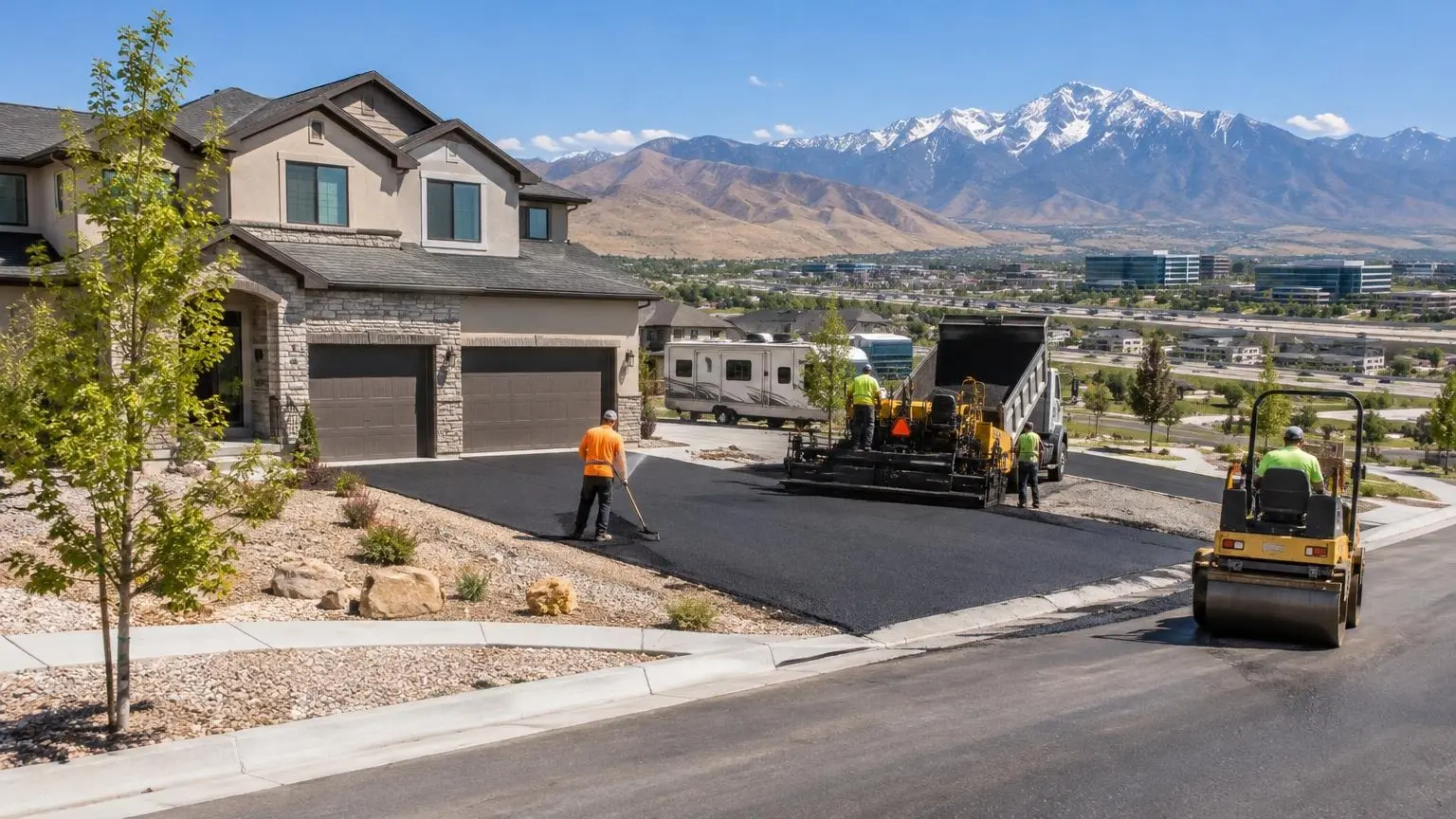
RV pads and driveway extensions are among the most common paving jobs in newer Utah County neighborhoods. Many homes come with a concrete driveway sized for two or three cars and a side yard of gravel or grass. An asphalt RV pad or extension turns that space into firm, clean parking for a trailer, boat, RV or extra vehicles at a lower cost than concrete.
Heavier loads need a thicker build
A motorhome or loaded trailer puts much more weight on a small area than a car. Its jacks and tongue stand concentrate that load even further. Cost guides suggest 8 to 10 inches of compacted base under 3 to 4 inches of asphalt for heavier vehicles. We build RV pads to that range or thicker, depending on the vehicle and the ground, and we write the numbers into the quote.
Side-yard access
Side-yard pads usually need a clear path past the house, a gate wide enough for the trailer, and enough turning room from the street. We measure the swing and look at fences, window wells, utility boxes and sprinkler lines before laying out the pad. Sprinkler lines in the way are common, and we flag them so they can be moved before we dig.
Matching the existing driveway
When asphalt meets a concrete driveway, we set the new surface flush with the concrete edge so there is no lip to trip on or catch a snow shovel. We grade the new pad so water runs away from the house and the foundation, not toward it.
HOA and city rules
Many Lehi-area subdivisions have HOA rules about RV parking, side-yard surfaces, fences and visible pads. Check your CC&Rs before you commit. If the extension means widening the drive approach in the city right-of-way, Lehi requires permits and inspection for that work and sets spacing between residential approaches. We look at both with you at the estimate.
Gravel or asphalt for the side yard?
Gravel is cheaper to install, at about $1 to $3 per square foot in HomeGuide's figures, but it ruts under trailer tires, tracks onto the driveway and lets weeds through. Asphalt costs more up front but gives a firm, clean surface that is easy to plow and does not wander into the lawn. For a pad that holds a heavy RV most of the year, asphalt on a solid base is usually worth it.
Upkeep
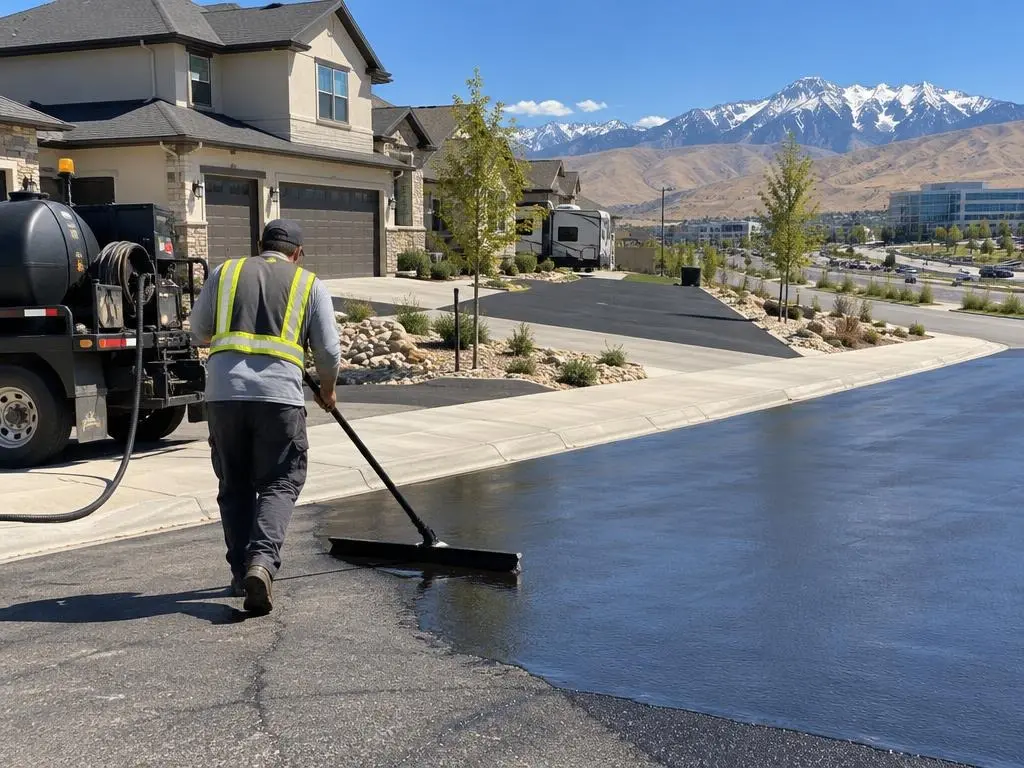
RV pads do not see daily traffic, but they sit in the sun all year. Sealcoat them along with the rest of your asphalt, and put plywood under jacks and stands to spread the load.
What This Covers
Pads and extensions laid out around how you will actually use them.
RV and trailer pads
Heavy-duty pads sized for the vehicle, with thicker base and asphalt.
Side-yard parking
Paved access past the house to a gated side yard.
Driveway widening
Asphalt added beside an existing concrete or asphalt driveway.
Grading and drainage
Pads sloped away from the foundation and window wells.
Typical RV Pad and Extension Costs
| Item | Published national range |
|---|---|
| Asphalt paving, installed (HomeGuide) | $5 to $12+ per sq ft |
| 200 sq ft extension (HomeGuide size table) | $1,000 to $2,400 |
| 400 sq ft pad (HomeGuide size table) | $2,000 to $4,800 |
| 600 sq ft pad (HomeGuide size table) | $3,000 to $7,200 |
| Heavy-duty section (HomeGuide) | 8-10 in base, 3-4 in asphalt |
National figures from HomeGuide. Heavy-duty sections, excavation, sprinkler relocation and side-yard access add to the cost, and small jobs often hit a contractor minimum. Your written estimate is the price.
How We Build a Pad
1. Measure and lay out
Check turning room, gate width, utilities and sprinkler lines.
2. Quote
Pad size, base depth and asphalt thickness written out.
3. Excavate and base
Dig out, place and compact road base for the load.
4. Pave
Asphalt placed flush with existing concrete and graded to drain.
RV Pads & Driveway Extensions Questions
How thick should an RV pad be?
Thicker than a driveway. Cost guides suggest 3 to 4 inches of asphalt over 8 to 10 inches of base for heavier vehicles. We size it to your RV or trailer.
Is asphalt or concrete better for an RV pad?
Asphalt costs less up front and is easy to patch. Concrete lasts longer but costs more. Both work if the base is right.
Does my HOA allow an RV pad?
Many HOAs have rules on RV parking and side-yard surfaces. Check your CC&Rs before scheduling.
What about my sprinkler lines?
We mark where they are likely to be. Lines under the pad area should be moved or sleeved before we dig.
RV Pads & Driveway Extensions Service Areas
- Asphalt Paving in Lehi, UT
- Asphalt Paving in American Fork, UT
- Asphalt Paving in Saratoga Springs, UT
- Asphalt Paving in Eagle Mountain, UT
- Asphalt Paving in Highland, UT
- Asphalt Paving in Alpine, UT
- Asphalt Paving in Cedar Hills, UT
- Asphalt Paving in Pleasant Grove, UT
- Asphalt Paving in Lindon, UT
- Asphalt Paving in Orem, UT
- Asphalt Paving in Vineyard, UT
- Asphalt Paving in Provo, UT
- Asphalt Paving in Springville, UT
- Asphalt Paving in Mapleton, UT
- Asphalt Paving in Fairfield, UT
- Asphalt Paving in Cedar Fort, UT
- Asphalt Paving in Draper, UT
- Asphalt Paving in Bluffdale, UT
- Asphalt Paving in Herriman, UT
- Asphalt Paving in Riverton, UT
- Asphalt Paving in South Jordan, UT
- Asphalt Paving in Sandy, UT
- Asphalt Paving in West Jordan, UT
Get a RV Pads & Driveway Extensions Estimate
Free estimates on RV pads and driveway extensions in Lehi.